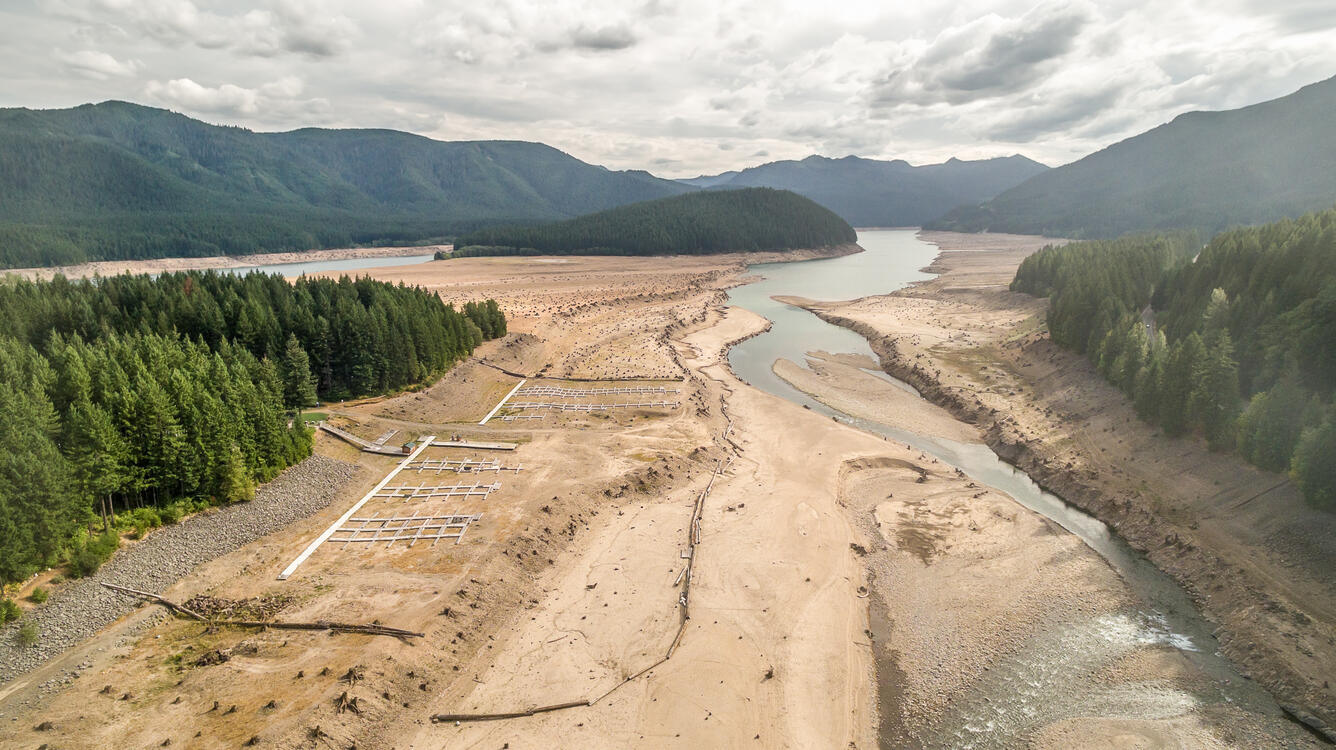
Oregon's worst drought in a generation has burned 2.4 million acres, triggered the first-ever cuts to senior water rights and left regional reservoirs so depleted that Salem's looming fight over Detroit Lake now carries higher stakes for the 220,000 people who depend on it for drinking water.
State Climatologist Larry O'Neill laid out the damage at a NOAA drought and climate outlook meeting on Tuesday, Aug. 25. About 4% of Oregon's total land area has burned this fire season, most of it within a single month. Across the Northwest, 3.5 million acres have burned.
"Drought didn't cause these ignitions, but they created the conditions with exceptionally dry vegetation and fuels that favor rapid fire growth and extreme impacts once those fires started," O'Neill said.
The Oregon Water Resources Department has cut senior water right holders' allotments for the first time, O'Neill told the meeting. Most of eastern Oregon has experienced what NOAA classifies as "extreme drought," with major crop and pasture losses and widespread water restrictions. In the Umpqua Basin in southwest Oregon, some irrigators have stopped watering and harvesting altogether.
What it means for Salem's water
The drought is already lowering Detroit Lake before the U.S. Army Corps of Engineers' planned deep drawdown even begins. The Corps intends to drop the reservoir to an elevation of 1,425 feet between Nov. 1 and Dec. 31 to protect endangered salmon and steelhead under a federal mandate, according to KOIN.
Salem filed a preliminary injunction on Tuesday, Aug. 25, to pause that plan. The city had initially sued the Corps on July 8 in U.S. District Court in Eugene. Marion County filed its own injunction motion on Aug. 10.
When the city filed its injunction, City Manager Krishna Namburi said the risks to Salem's system "need to be mitigated before such a drastic measure is taken."
Salem has invested nearly $8 million over the past 18 months in backup infrastructure, including groundwater wells on Geren Island, an aquifer storage and recovery facility in South Salem and an emergency supply connection with Keizer.
Commissioner Colm Willis, chair of the Marion County Board of Commissioners, called the drawdown plan "patently absurd" on Aug. 11, the day after the county filed its motion.
"Since the Army Corps refused to listen to reasonable requests from the county, cities, and schools, this lawsuit is the strongest means we have to protect our downstream communities as well as recreation at Detroit Lake," Willis said.
Farm losses mounting
The drought's toll on agriculture is growing across the region. In Idaho, crop insurance indemnities have already cost $20 million, with the full price tag likely far higher once claims are processed after the growing season.
Marion County is among 24 Oregon counties included in a federal Small Business Administration disaster loan program for drought impacts dating to March 24. Eligible small businesses can apply for up to $2 million in low-interest loans through March 1, 2027.
O'Neill warned that even what he expects to be a "very strong" El Niño this winter is unlikely to refill the region's reservoirs. Water carryover into 2027 is expected to be "non-existent to very low" across central and eastern Oregon.
No court date has been set for Salem's injunction request. The Corps has said it will use forecast data to determine when to begin the drawdown within its Nov. 1 to Dec. 31 window.