A federal rule caps THC in hemp products at 0.4 milligrams per container starting Dec. 11. For Oregon hemp growers, the change could wipe out their market almost overnight.
Oregon CBD, an Independence-based company co-owned by Eric Crawford and Seth Crawford, estimates it supplies 75% of the hemp seeds grown on farms across the country, OPB reported.
The company, which also operates as a cannabis research lab, is preparing greenhouses on its 50-acre farm without knowing whether buyers will materialize.
"We don't know what else to do with ourselves. So we're plowing ahead," Seth Crawford, co-owner of Oregon CBD, told OPB.
What the rule does
Congress included a provision in its fiscal year 2026 Agriculture appropriations act that amends the federal definition of hemp. The law changes the THC limit from 0.3% delta-9 THC by dry weight to a total THC standard, according to a Congressional Research Service analysis.
Final hemp-derived cannabinoid products containing more than 0.4 milligrams of THC per container would no longer qualify as federally legal hemp.
That limit applies per container, not per serving, according to a National Law Review analysis published Nov. 5. A 10-serving bottle does not get 10 separate allowances.
The cap is meant to target unregulated intoxicating hemp products, OPB reported.
Some producers had exploited a loophole in the 2018 Farm Bill by chemically converting CBD into delta-8 or delta-9 THC, creating products sold in gas stations and convenience stores with little oversight.
But even non-intoxicating hemp CBD products contain more than 0.4 milligrams of THC, according to OPB.
That means the rule sweeps up legitimate CBD manufacturers alongside the intoxicating products it targets. Companies that don't meet the threshold could risk violating the federal Controlled Substances Act.
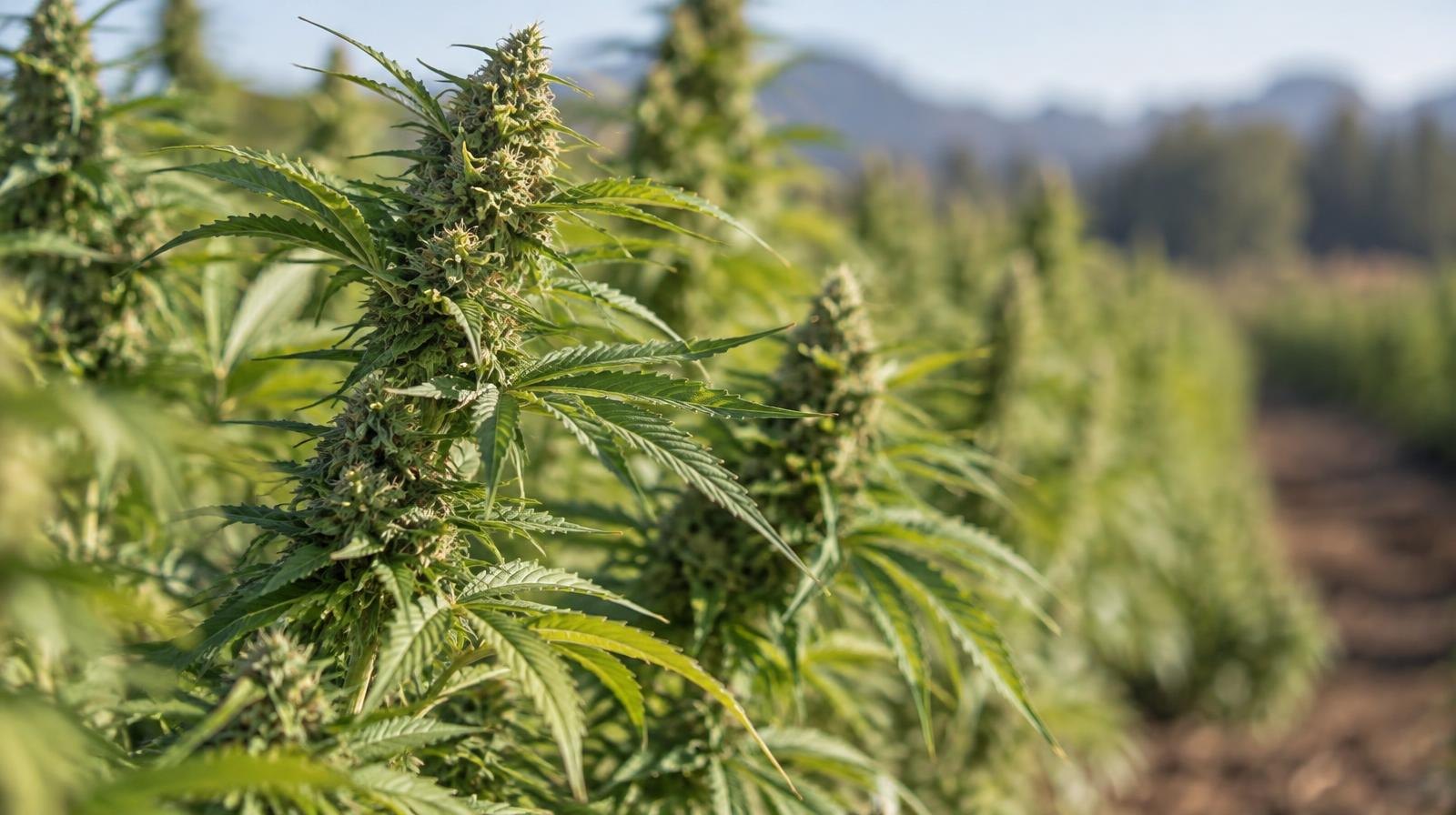
Growing hemp will still be legal. But if manufacturers can't produce CBD products, growers lose their buyers.
Oregon acreage already dropping
Oregon's hemp acreage dropped 40.6% in 2026, falling to 1,668 acres from 2,808 in 2025, according to Oregon Department of Agriculture (ODA) data cited by OPB.
Almost all Oregon hemp growers raise floral hemp processed for its cannabidiol, or CBD.
Jeffrey Steiner, director of Oregon State University's Global Hemp Innovation Center, told OPB he believes acreage could fall further by 2027 if nothing changes.
He said growers face no assurance anyone will buy hemp flower grown for CBD given the regulatory uncertainty.
Eric Crawford told OPB the 0.4-milligram cap was not based on science. He said regulations are important to protect consumers but that the cap goes "way too far in one direction."
Congress holds the pen
The newly elected Congress won't be seated until Jan. 3, 2027, the National Law Review analysis noted.
Any fix before Dec. 11 must pass the current Congress and reach the president's desk.
Several bills have been proposed but none enacted. The Hemp Planting Predictability Act would extend the timeline.
The HEMP Act would create an FDA-centered regulatory framework. The Lawful Hemp Protection Act would repeal the provision entirely.
The CRS analysis noted that hemp industry groups oppose the definition changes. It also stated that both the FDA and the Drug Enforcement Administration may lack resources to broadly enforce the laws prohibiting intoxicating hemp products on the market.
Steiner told OPB he supports regulation but wishes Congress would close the loophole without shutting down legitimate markets.
He suggested distinguishing between industrial hemp grown for fiber or grain, hemp grown for naturally occurring CBD, and cannabis chemically converted to cause a high.
The Crawford brothers are hoping Congress acts before Dec. 11. For now, they're not counting on it.