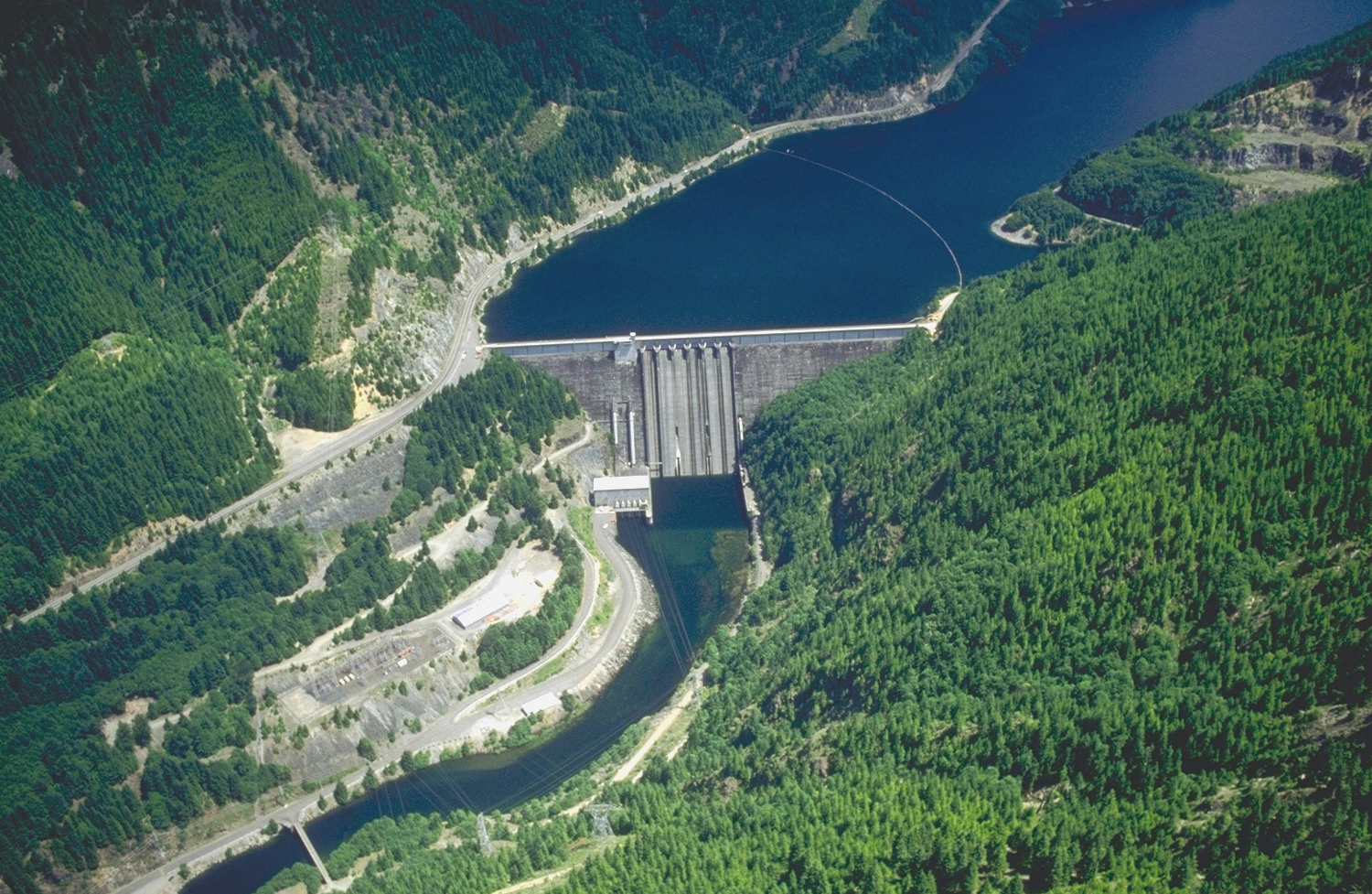
Salem and Marion County are now fighting on two legal fronts to stop the U.S. Army Corps of Engineers from draining Detroit Lake this fall, a plan that threatens drinking water for the more than 220,000 people served by Salem's water system.
The City of Salem filed its federal lawsuit July 8, in U.S. District Court in Eugene. Marion County Board of Commissioners Chair Colm Willis and Commissioners Kevin Cameron and Danielle Bethell issued a joint statement the same day welcoming the city's action and noting the county filed its own parallel suit in May.
"The damage to downstream water systems due to the Army Corps' irresponsible draining of Green Peter Lake was not theoretical," Willis said when the county announced its May filing. "It was real, it was catastrophic, and it caused millions of dollars in damages to downstream water systems in the cities of Lebanon and Sweet Home."
Both lawsuits ask a federal judge to pause the Corps' planned deep drawdown until the agency completes a turbidity study the county says is more than six months overdue, according to the Marion County press release.
The county's May suit, filed as case 6:26-cv-00956, makes substantially the same demand: halt the drawdown until the Corps finishes the study and allows informed public comment.
The Corps plans to lower Detroit Reservoir to roughly 1,395 feet above sea level, about 55 feet below its typical fall elevation. That would be the lowest level since the dam was built more than 70 years ago.
Salem's water treatment plant relies on slow sand filters that work best when turbidity stays below 10 NTU, a measure of water clarity. When the Corps drained nearby Green Peter Reservoir in 2023, turbidity spiked to 2,700 NTU, overwhelmed downstream systems, and killed more than one million kokanee salmon, a figure confirmed by the Corps' own biologists, according to the county's May lawsuit announcement.
Salem City Manager Krishna Namburi said the city's drinking water remains safe but called the Corps' plan a threat to long-term reliability. The city has spent nearly $8 million over the past 18 months on backup water sources, including groundwater wells on Geren Island and an emergency connection with Keizer.
Those alternatives can supply about 22 million gallons per day, still short of Salem's average daily demand of 24 to 25 million gallons.
A growing coalition
Marion County hasn't been fighting alone. On June 22, the county submitted a formal letter on behalf of a coalition that includes the cities of Stayton, Sublimity, Mill City, and Idanha, plus the Detroit Lake Foundation and the Woodburn Area Chamber of Commerce, urging the Corps to cancel the 2026 drawdown.
The Corps said in a June 2026 statement that the drawdown "has been shaped to reflect the lessons learned and to reduce impacts on downstream communities."
Salem's lawsuit asks the Corps to comply with the National Environmental Policy Act, the Administrative Procedure Act, and the 2024 Water Resources Development Act. It also seeks a sediment-level trigger that would halt the drawdown if turbidity threatens treatment infrastructure.
How to weigh in
The Marion County Board of Commissioners meets next on Wednesday, July 15, at 9 a.m. in the Senator Hearing Room, 555 Court St. NE, Salem. Residents can attend or submit written comments through the county's public comment process.