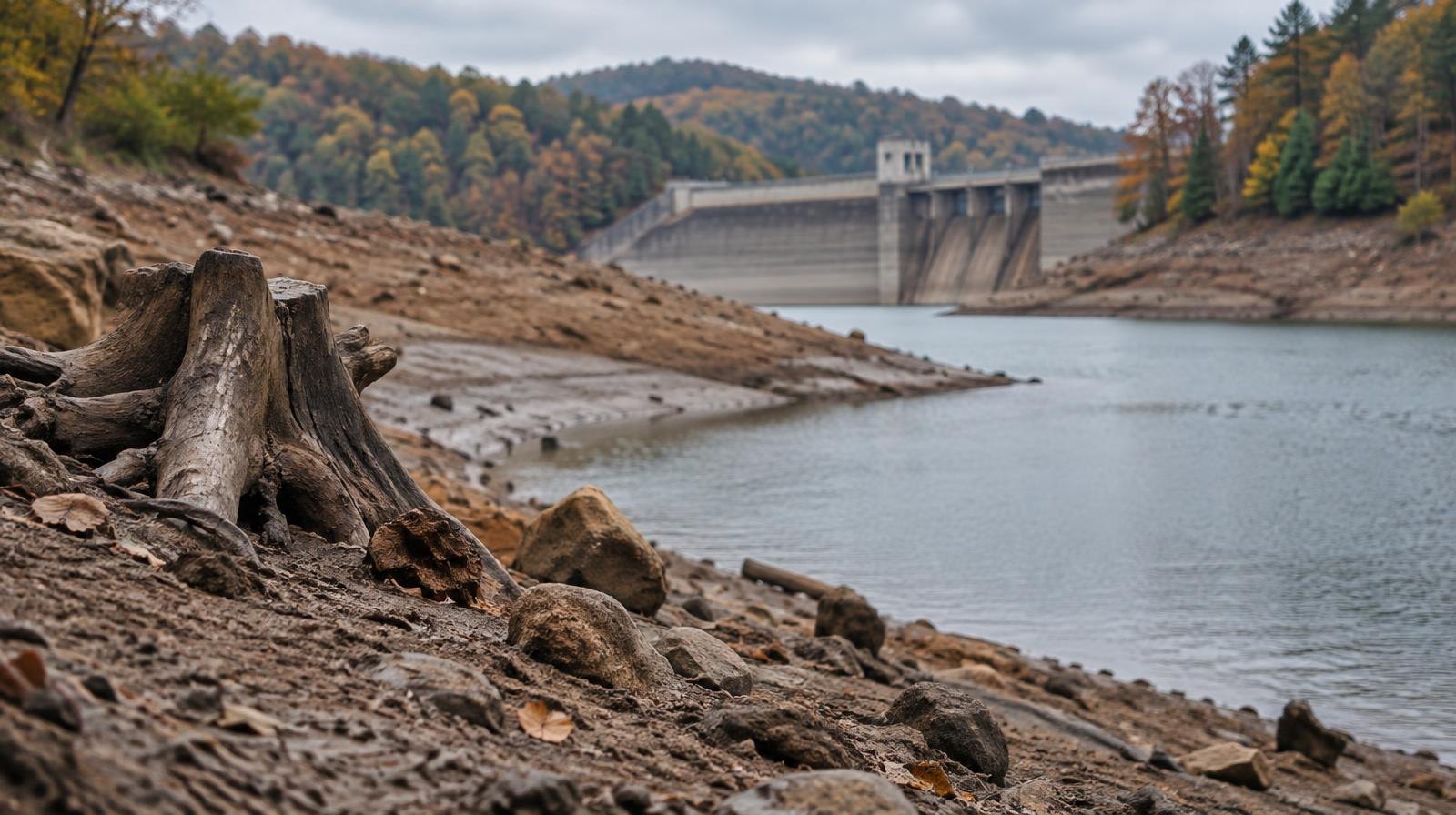
Salem is fighting to stop the draining of Detroit Lake, filing an appeal after a federal judge cleared the U.S. Army Corps of Engineers to lower the reservoir to historic levels.
Public Works Director Brian Martin said the city will challenge the Nov. 4 ruling by U.S. District Judge Mustafa T. Kasubhai, who denied Salem and Marion County's request for a preliminary injunction.
"We have reviewed the Court's order and will be appealing the decision," Martin said in a city statement posted Nov. 5. "We remain concerned about the impact of drawdowns on our drinking water supply and our ability to meet long-term community needs for clean and safe drinking water."
Salem supplies drinking water to about 220,000 residents, along with hospitals, schools, businesses and firefighting operations, according to the city. The service area includes the City of Turner, two water districts and portions of unincorporated Marion and Polk counties.
The city's appeal is separate from Marion County's. Marion County announced on Nov. 4 that it would take the case to the U.S. Court of Appeals for the Ninth Circuit and seek an emergency injunction.
"We are extremely disappointed … but this fight is far from over," Marion County Board of Commissioners Chair Colm Willis said. "The Army Corps is endangering our drinking water, our farmers, our fish, and our canyon communities."
Why the drawdown is happening
The Army Corps plans to lower Detroit Reservoir to an elevation of 1,425 feet in late November, according to KOIN. That is 25 feet below the historic seasonal level of 1,450 feet the Corps has used each fall to make room for winter rain.
The deeper drawdown stems from a biological opinion by the National Marine Fisheries Service, issued in December 2024. That opinion found the Corps must support endangered steelhead and salmon in the North Santiam River, Salem's primary drinking water source, according to Salem Reporter.
The Corps plans to reach a target elevation of 1,395 feet over multiple years, lowering the reservoir incrementally rather than all at once. The drawdown at 1,425 feet is expected to last about two weeks, KOIN reported.
The Corps said drinking water is "not expected to be impacted" and pointed to 2015 and 2019, when the reservoir reached 1,425 feet without reported turbidity problems downstream, KOIN reported.
What Salem and the county argue
Salem and Marion County warn the drawdown could stir up sediment on the reservoir bottom, overwhelming the sand filtration system at the Geren Island Water Treatment Facility.
They point to a 2023 drawdown at nearby Green Peter Lake, where a rapid draining killed thousands of salmon and caused what Marion County called "massive increases" in turbidity that harmed downstream water systems.
Marion County also argues the Corps has not completed a turbidity report required by Congress to evaluate lessons from the Green Peter experience. The county contends the Corps missed that legal deadline by more than four months, according to KYKN.
In his ruling, Judge Kasubhai acknowledged the potential harms are "undoubtedly irreparable" but said Salem and Marion County did not prove the Detroit drawdown would likely cause them, Salem Reporter reported.
What's ahead
The underlying lawsuit continues in U.S. District Court. Marion County is also seeking to block an even deeper drawdown the Corps plans for fall 2027.
Salem declared a water emergency in July 2025, fast-tracking upgrades including new filtration systems, a pump station shared with Keizer and new wells at Geren Island, according to Salem Reporter.
The Army Corps said it will host public information sessions Nov. 18 to explain the drawdown timeline and how it plans to address drinking water concerns. Specific times had not been announced as of Nov. 7.
KOIN reported the Corps declined to comment on the appeals. Residents can find updates at cityofsalem.net/drawdown.