Of the roughly 4,000 buildings the state of Oregon owns, just five would remain standing and immediately usable after a major Cascadia Subduction Zone earthquake, according to Jonna Papaefthimiou, state resilience officer in Gov. Tina Kotek's office.
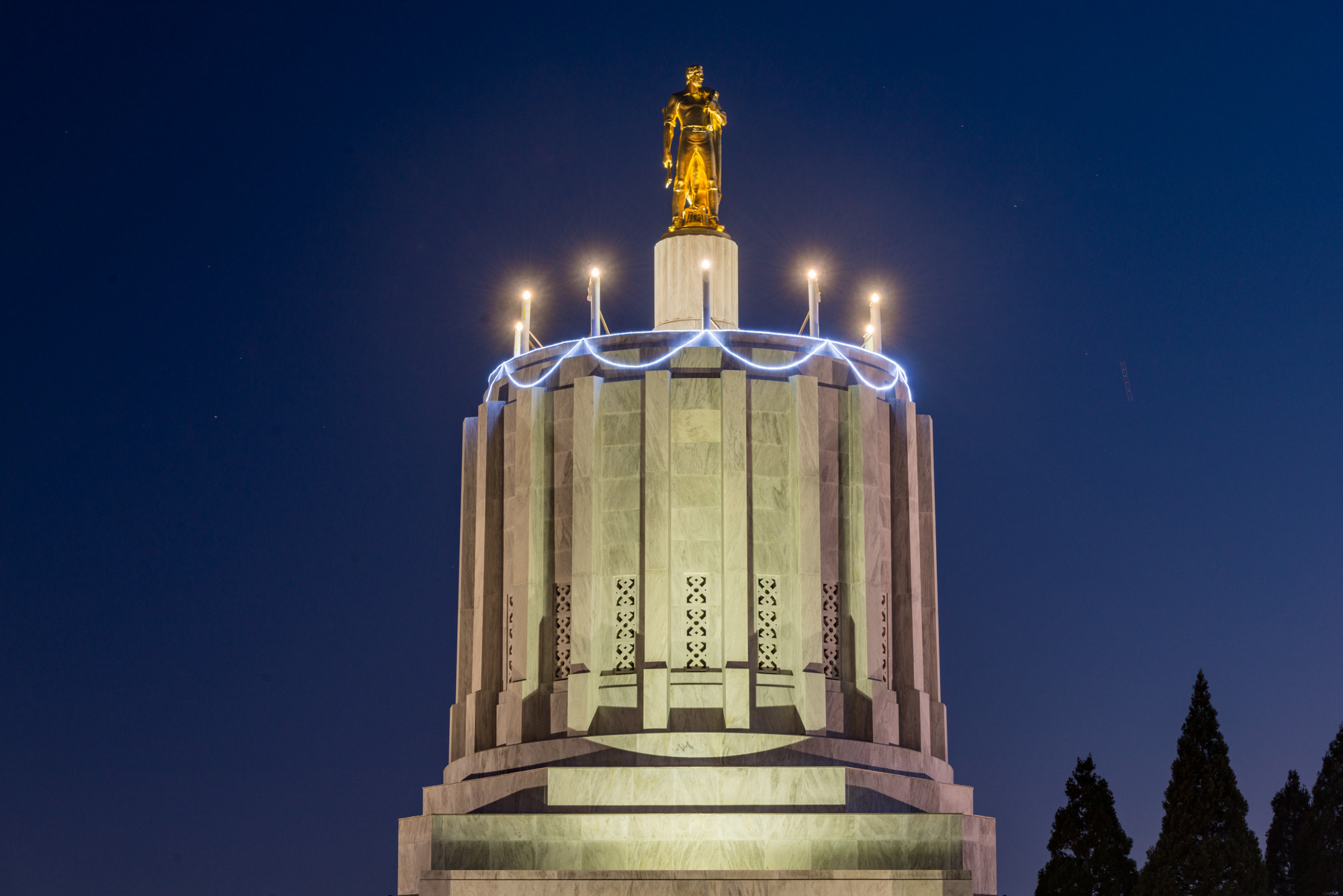
Salem's recently retrofitted State Capitol is one of them.
Papaefthimiou made the assessment July 17, at the 13th annual National Conference on Earthquake Engineering in Portland.
The conference brought together engineers, state officials, and infrastructure experts who painted a stark picture of Oregon's readiness for the quake seismologists say has a 42% chance of striking in the next 50 years. Papaefthimiou did not publicly name the other four buildings.
Salem's Capitol: built to stay put
The Capitol's survival odds stem from a multiyear seismic retrofit known as the Capitol Accessibility, Maintenance, and Safety project, which has been allocated more than $500 million across three phases.
Workers installed 160 base isolators beneath the 88-year-old building's foundation, separating it from the ground. The system became fully operational in February 2025, and the Capitol Rotunda reopened to the public September 29, 2025.
A moat now surrounds the building, giving it room to shift up to 2 feet in any direction while the earth moves beneath it.
Tom Wharton, an engineer at the Port of Portland, told the conference audience that Oregonians west of the Cascades would be "luckiest" to find themselves at the Capitol or atop Portland International Airport's new terminal when the quake hits.
The line drew laughs from the audience, the Oregon Capital Chronicle reported.
Gaps experts identified
Despite the Capitol retrofit and Kotek's September 8, 2025, executive order requiring all large state-owned buildings to be seismically upgraded or replaced by 2060, experts at the conference identified urgent vulnerabilities:
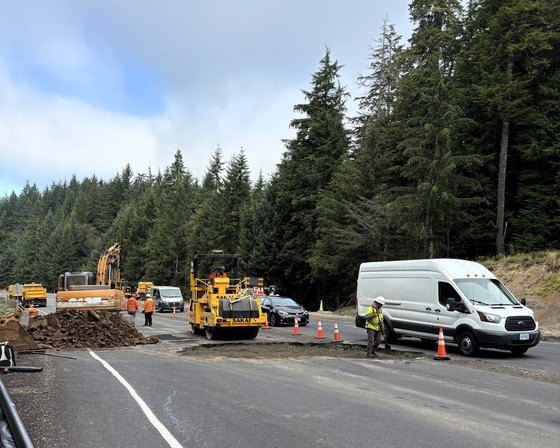
Coastal Route 101 has not been seismically retrofitted and already faces frequent landslides and flooding. Mike Olsen, an Oregon State University civil engineering professor and director of the Cascadia Lifelines Program, warned that if the highway shuts down for an extended period after the quake, "then you've lost those coastal communities, and you're not going to get those back."
Bridges statewide need an estimated $40 million in repairs to address deficiencies that leave them vulnerable to the quake, according to Yumei Wang, a civil engineering and infrastructure resilience expert at Portland State University.
The power grid poses another risk. The Bonneville Power Administration controls most of the Northwest's electricity distribution and didn't begin implementing seismic code until the 1980s. BPA engineer Leon Kempner said the agency lacks resources to retrofit the grid as quickly as needed.
The Port of Portland needs nearly $500 million to upgrade a runway capable of handling large FEMA aircraft for recovery operations. A National Institute of Building Sciences study found that investment would yield a net $7 billion savings benefit for Oregon's post-quake recovery.
What Salem residents can do
Seismologists project the Cascadia fault last ruptured in 1700 and produces major earthquakes roughly every 300 to 500 years. A partial rupture could reach magnitude 7.4 or greater; a full rupture could exceed 8.7.
OSU Extension warns that services would likely be interrupted for at least two weeks.
Marion County Emergency Management Director Greg Walsh encourages residents to build emergency kits, make evacuation and communication plans, and sign up for Marion-Polk Alerts. The county's emergency management office can be reached at (503) 365-3133.
OSU Extension offers a free online Cascadia preparedness training program at extension.oregonstate.edu/cascadia-earthquake-preparedness.
The Oregon Department of Emergency Management, headquartered in Salem at 3930 Fairview Industrial Drive SE, provides additional resources at oregon.gov/oem and can be reached at 503-378-2911.