Scott Pike, a professor of environmental science and archaeology at Willamette University, has won a Fulbright U.S. Scholar Program award to study how wildfires are reshaping archaeological landscapes in Greece.
Pike will spend spring 2027 based at the Malcolm H. Wiener Laboratory for Archaeological Science at the American School of Classical Studies at Athens, Willamette University announced Oct. 28.
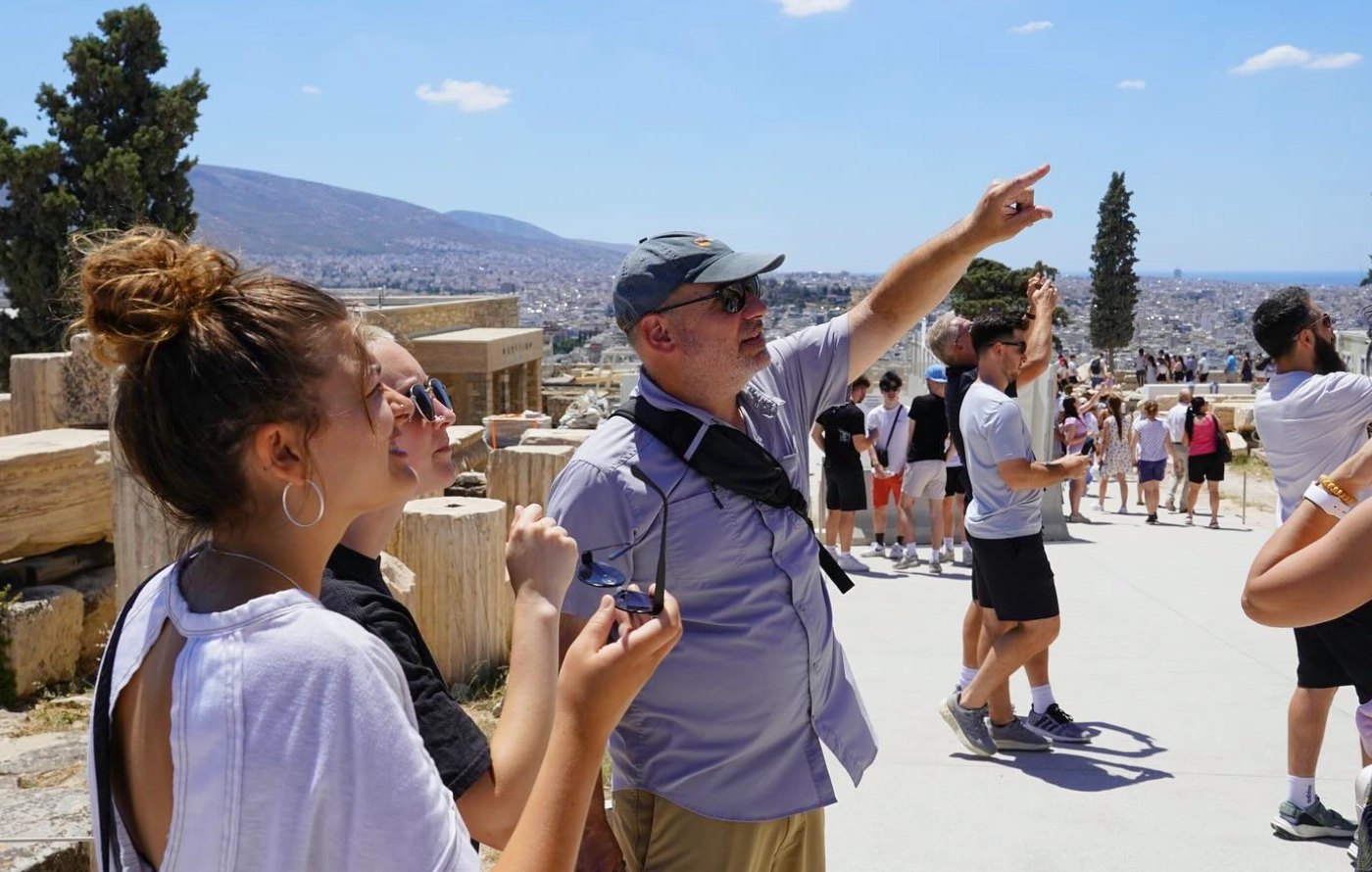
The project grew out of previous fieldwork Pike conducted with Willamette undergraduates in the Attica region of Greece, where the team used drones to investigate archaeological remains, according to the university.
Drones over ancient ground
Wildfires increasingly threaten cultural heritage across the Mediterranean, damaging sites and speeding erosion. Pike's research will use drones equipped with visible-light cameras, thermal sensors and LiDAR scanners to document cultural features and measure surrounding terrain. The data will help researchers assess where erosion and slope instability may put archaeological resources at risk.
The project will also include workshops and seminars to train Greek archaeologists, students and community members in using drones to document and preserve cultural heritage.
"I am particularly excited that this project will produce actionable data for cultural heritage professionals, provide training in emerging technologies, and engage local communities in efforts to document and protect archaeological resources in wildfire-affected landscapes," Pike said.
A year of honors
The Fulbright follows another major recognition. In January 2026, Pike received the Excellence in Undergraduate Teaching Award from the Archaeological Institute of America, one of the field's highest teaching honors, according to the university.
Pike has led summer teaching and research programs in Scotland, Italy, Greece, Japan and China, along with semester-long programs in Ireland and New Zealand. He plans to bring the research methods developed through the fellowship back to his environmental science and archaeology courses at Willamette. Students will use the project's drone imagery and landscape data to study wildfire impacts, erosion, vegetation recovery and cultural heritage preservation.
Pike also hopes to build on collaborations from the fellowship to continue taking students to Greece for field research.
Willamette's Fulbright track record
Willamette has a long history with the Fulbright program. More than 25 faculty members and more than 50 students have received the award since 1959, according to the university. In March 2025, the U.S. Department of State's Bureau of Educational and Cultural Affairs recognized Willamette as a top-producing institution for Fulbright U.S. Scholars. Willamette was the only school in Oregon and one of three in the Pacific Northwest to earn that distinction.
Pike's fellowship begins in spring 2027 at the Athens laboratory.