A $3.4 million federal research project is filling a data gap that has left organic seed growers guessing about yields, and part of the work is happening in Marion County.
Oregon State University and the Organic Seed Alliance hosted the OSPREY Seed Summit and Field Tour on Aug. 19 at OSU's North Willamette Research and Extension Center in Aurora. Growers, researchers and agricultural professionals walked through plots of flowering lettuce, squash and brassicas to see trials aimed at answering basic production questions, OSU Extension Service reported.
OSPREY, short for Organic Seed Production Research on Economics and Yield, is a four-year project launched in September 2024. The Organic Seed Alliance, based in Port Townsend, Washington, leads the effort. The U.S. Department of Agriculture's National Institute of Food and Agriculture funds it through the Organic Research and Extension Initiative (OREI).
The project spans more than 300 varieties across 17 states and involves more than 20 growers, according to the Organic Seed Alliance. Its goal: a freely available database of organic seed-yield data and economic tools growers can use to make planting and irrigation decisions.
The need is basic.
Kristie Buckland, an associate professor and OSU Extension vegetable and specialty seed crop specialist, said growers have almost nothing to go on.
"A lot of people are operating in this 'no data zone' because it just doesn't exist yet," Buckland said at the Aug. 19 field day.
Farmers can find irrigation guidance for growing vegetables to harvest. But seed producers must keep plants growing through flowering and seed development, and research-based recommendations for those later stages are scarce.
At the Aurora station, OSU researchers are comparing different irrigation levels on four core crops: broccoli, lettuce, squash and tomato. A parallel trial is underway in California.
Attendees saw rows of lettuce grown past the leafy stage, their tall stems covered with flowers and developing seed. Signs marked plots receiving different amounts of water. Nearby, researchers tested irrigation levels on rows of delicata squash.
In 2027, OSPREY trials will shift to plant spacing and its effect on seed yield.
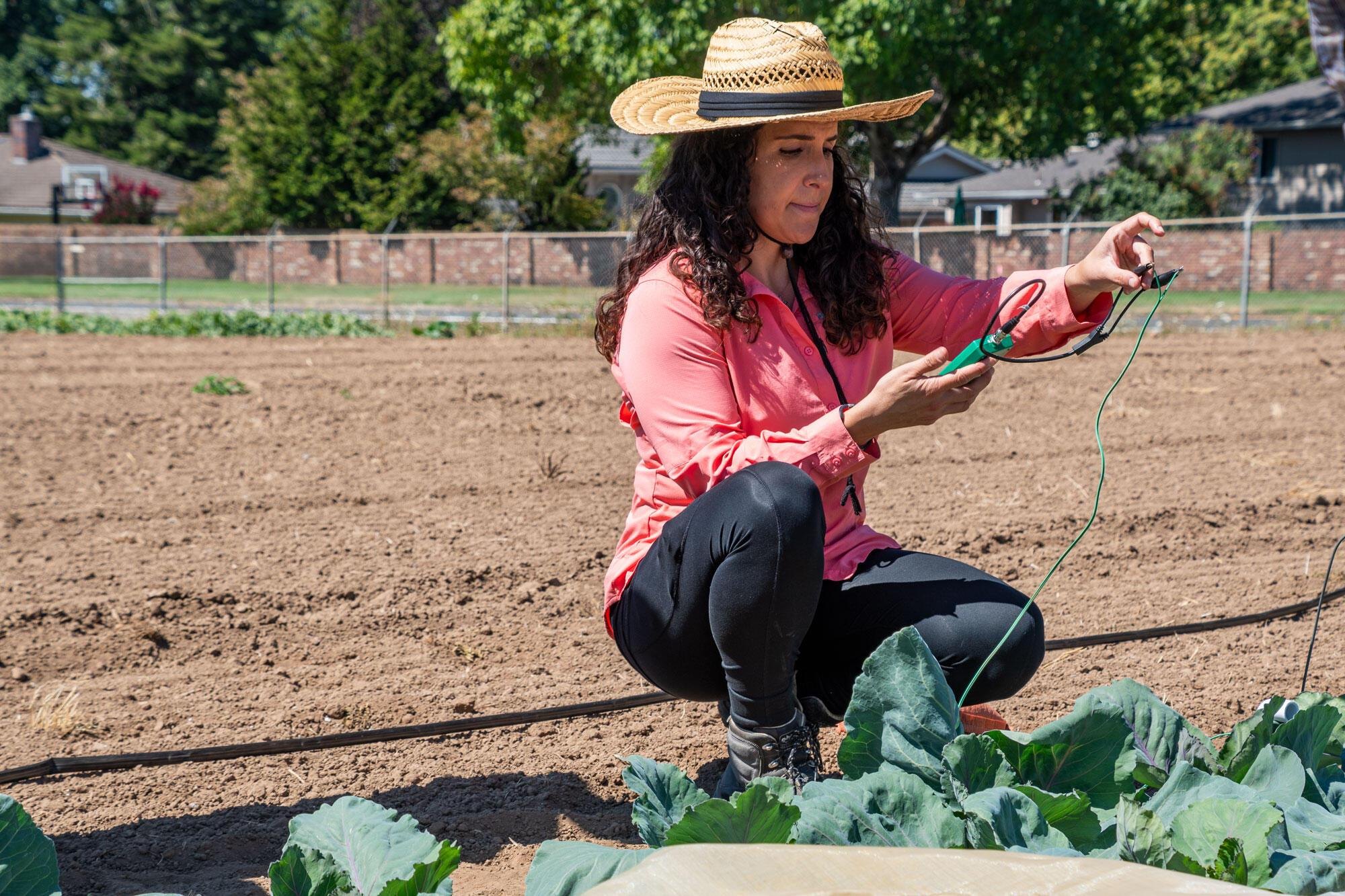
The field day also featured lower-cost soil moisture sensing stations that an OSU team has been developing. Berit Dinsdale, an OSU Extension faculty research assistant, explained the technology, which grew out of a statewide needs assessment in which farmers said they wanted soil moisture data but found existing systems too expensive. Heidi Noordijk, OSU Extension Metro Small Farms coordinator, said the team has been testing the stations at the Aurora center for three years before deploying them to growers' fields.
Lane Selman, an assistant professor of practice in OSU's Department of Horticulture and founder of the Culinary Breeding Network, described specialty crop breeding work including new brassicas that combine traits from kale, collards and sprouting broccoli. One breeding effort aims at a dual-purpose plant that could produce both tender leaves and broccoli-like shoots.
The Pacific Northwest specialty vegetable seed industry exceeds $50 million in farm-gate value across the region, with more than 170 seed crops grown on relatively small acreages that supply global markets, according to an OSU Extension survey published in March 2026.
The OSPREY project's specialty crop breeding work will return to Oregon for a larger field day and variety showcase in 2028.