Salem's first confirmed emerald ash borer turned up in a city trap near West Fork Pringle Creek in south Salem in July, giving residents a specific location for the invasive beetle that forestry officials say will eventually destroy 99% of untreated ash trees in Oregon.
The Oregon Department of Forestry announced Aug. 6 that traps set in spring and checked in July turned up the metallic-green beetle at multiple new sites across the Willamette Valley. City employees found the suspected EAB near the creek; the Oregon departments of Forestry and Agriculture later confirmed the identification.
New detections were also confirmed at Bethany Lake Park in the Rockcreek area, the Oregon Garden in Silverton and the Banks-Vernonia State Trail, marking the first time EAB has been found in an Oregon state park.
Salem had already begun preparing for EAB's arrival before the detection was confirmed. The city has inventoried nearly 4,000 ash trees along streets, in parks and in more than 400 acres of natural areas dense with Oregon ash. It halted new ash plantings, started removing unhealthy ash trees and created a formal readiness and response plan.
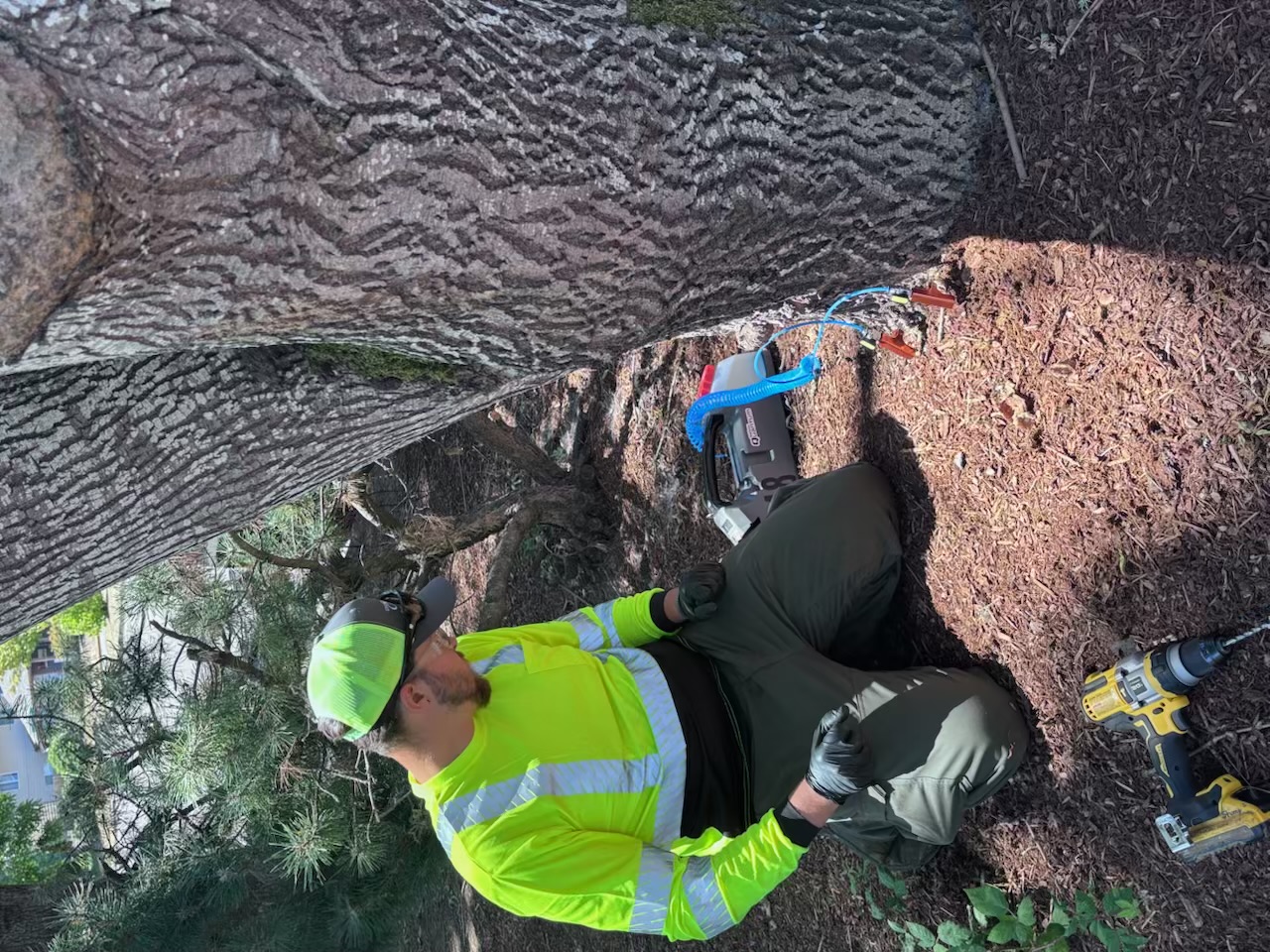
The centerpiece of that plan: insecticide injections into roughly 1,200 healthy ash trees. The first 600 trees in northern Salem received treatment in summer 2025. Another 600 are scheduled for spring 2027.
"The insecticide is injected at the base of the trunk and gets taken up into the tree canopy and is quite effective at protecting the tree from both adults and larvae," EAB specialist Matt Mills of the Oregon Department of Forestry said Aug. 6.
Treatments must be repeated every two to three years for the life of the tree. For a large ash, that can run about $400 per treatment, according to OPB.
What homeowners can do
ODF recommends homeowners with healthy, high-value ash trees hire a licensed pesticide applicator for insecticide injections. Trees already in poor health, planted under power lines or unlikely to receive ongoing treatment should be removed and replaced with non-susceptible species.
EAB specialist Kat Bethea of the Oregon Department of Forestry said signs of infestation include thinning and yellowing leaves, bark splitting, D-shaped exit holes in the bark and shoots sprouting from the trunk or branches. EAB adults are active only from June through September.
The city said residents can slow the beetle's spread by not moving firewood or ash materials more than 10 miles from where they were collected and by keeping ash wood inside the five-county quarantine zone covering Clackamas, Marion, Multnomah, Washington and Yamhill counties. Marion County has been under a permanent EAB quarantine since 2024.
Residents who spot a suspected EAB should capture it in a container or take a close-up photo and report it to the Oregon Invasive Species Hotline at 1-866-INVADER or online at oregoninvasiveshotline.org.
Salem's full EAB readiness plan and homeowner guidance are posted at cityofsalem.net. An ODF map showing confirmed infestations statewide is available at OregonEAB.com.
What's ahead
Oregon ash is the Pacific Northwest's only native ash species and plays a critical role shading streams for threatened salmon and trout. First detected in Oregon near Forest Grove in June 2022, EAB has now spread to five Willamette Valley counties. Once established, it cannot be eradicated.
Salem's next round of public tree treatments is planned for spring 2027. No date for a community outreach event has been announced.