Oregon's 16 Medicaid insurers collectively earned $67 million in profit last year after nearly breaking even in 2024, according to a new Oregon Health Authority financial analysis released Wednesday, Aug. 12. The turnaround matters locally because PacificSource Community Solutions, the sole coordinated care organization serving Marion and Polk counties, manages healthcare for roughly 168,000 Medicaid enrollees as of September 2025 who rely on Salem Health's hospitals and clinics.
The statewide recovery was fueled by $149 million in emergency government funding: $119 million federal and $30 million from Oregon's general fund, approved by the Legislature in June 2025. That injection lifted CCOs from a razor-thin $129,000 collective profit in 2024 to a 0.8% operating margin in 2025.
What this means for Salem
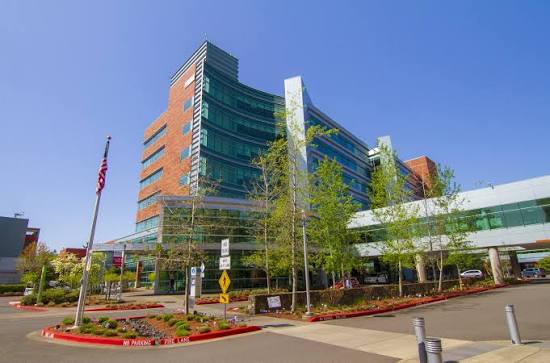
Salem Health, the city's largest private employer with more than 6,400 workers, draws about 23.4% of its gross revenue from Medicaid and self-pay patients, according to a June 2026 Fitch Ratings analysis. A financially stable CCO system means the pipeline of Medicaid reimbursements flowing to Salem Hospital and its network of clinics is less likely to face disruption.
The connection is institutional. Dr. Matt Boles, a Salem Health physician, sits on PacificSource Marion/Polk's governing board.
Still, the picture is mixed. Salem Health itself reported a $32 million operating loss in fiscal year 2025, driven by labor and supply inflation. And PacificSource Marion/Polk saw the steepest enrollment drop of any Oregon CCO in 2024, losing 11.35% of its membership during post-pandemic Medicaid redeterminations, according to OHA's 2024 CCO report.
How capitation rates work
OHA pays CCOs a flat monthly amount for each enrolled member. That per-person payment is called a capitation rate. OHA also awards annual bonuses for hitting care-quality targets. Together, these payments are how Medicaid dollars reach local providers like Salem Health.
After CCOs threatened to exit markets in 2025, OHA raised 2026 capitation rates by 10.2%. When announcing that increase in October 2025, OHA Director Sejal Hathi said the state was "investing more now to protect the stability of our Medicaid system" while pledging discipline on future costs.
The rate hike appears to be working. Preliminary 2026 data through March 31 shows CCOs collectively running a 1.7% profit margin, more than double the 2025 figure.
What happens next
OHA is now developing 2027 capitation rates, factoring in the 2025 results and early 2026 claims data. The agency will finalize those rates by the end of 2026, though no specific hearing date has been announced.
Salem Health CFO James Parr framed the broader financial pressure in a July 2026 Hospital Association of Oregon report: "To keep up with an aging and growing population, our community needs to add about 150 hospital beds every 10 years. Financial constraints make it difficult for hospitals to save up for needed expansion and equipment."
OHA's 2027 rate decision will determine whether the Medicaid reimbursement gains hold for the Marion and Polk county residents whose care flows through PacificSource.