Oregon State University researchers say seven years of field trials show high-voltage electricity can sharply reduce weed growth in hazelnut orchards and blueberry fields across the Willamette Valley.
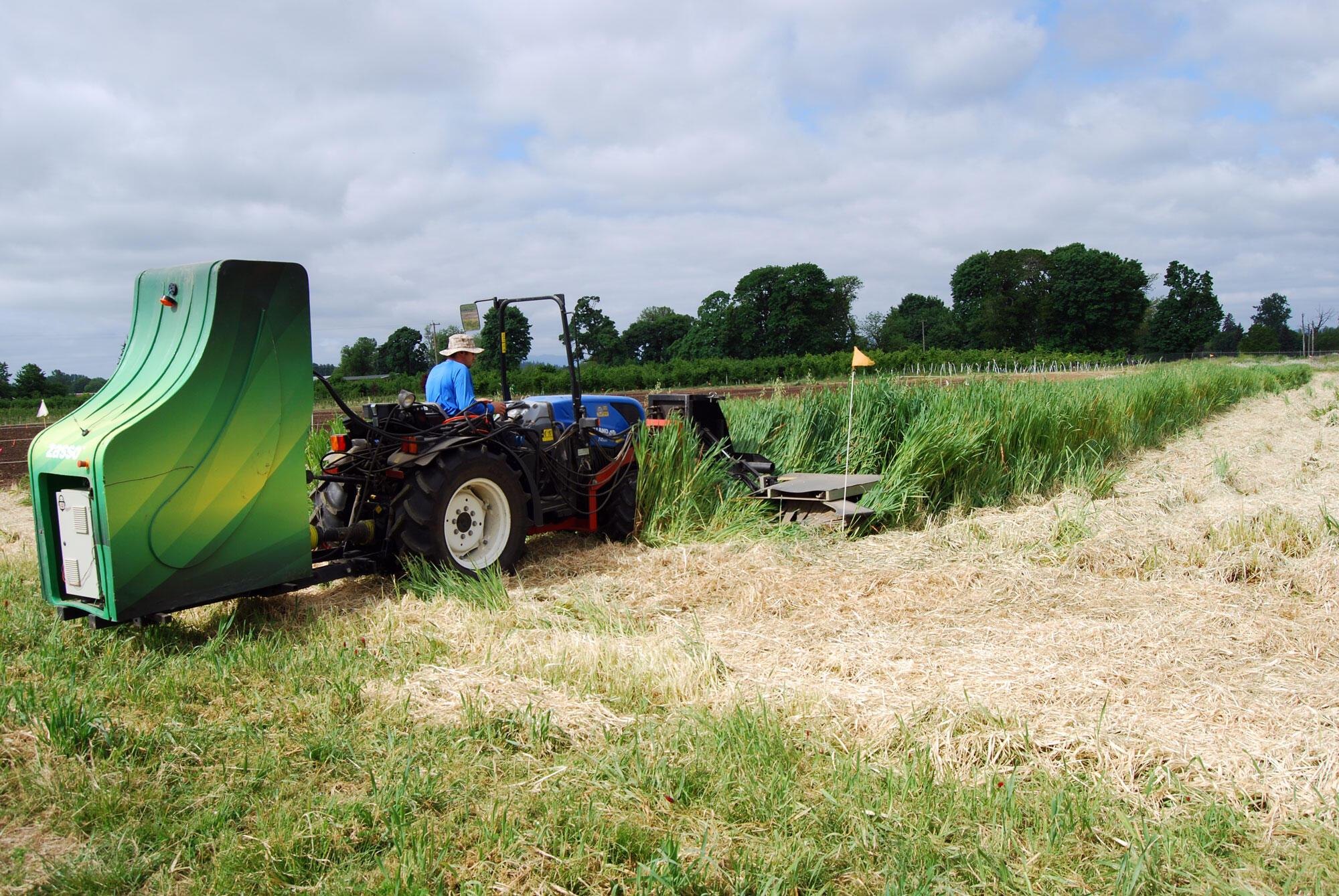
OSU weed specialist Marcelo Moretti started testing electrical weed control (EWC) in 2019. The technology uses a tractor-powered generator to send high-voltage current through metal electrodes that contact weeds.
The electricity travels through plant tissue, creating heat that damages cells and potentially affects roots, according to the OSU Extension Service. Unlike tillage, it leaves the soil surface undisturbed.
"We found EWC was very effective … When I started, I thought it would be just another tool for testing. I'm very glad I was wrong," Moretti said.
The research began in hazelnut orchards, where the problem is acute. Hazelnuts are harvested from the orchard floor, so the ground must stay firm and clear of debris.
Tillage can damage roots and soil structure. Herbicide resistance has narrowed growers' options further.
Marion County is one of Oregon's top hazelnut-producing counties. The state's hazelnut acreage hit a record 88,000 acres in 2024, according to Capital Press. The 2025 crop reached a record 121,500 tons in-shell, valued at $340 million, according to USDA data reported by Your Oregon News.
A study published in Pest Management Science tested EWC against Canada thistle at sites in Corvallis and at a cooperating hazelnut orchard in Canby. Two electrical treatments reduced aboveground thistle biomass by 95% at the Canby site. Combining electricity with the herbicide clopyralid pushed control as high as 98%. Researchers cautioned that multiyear study is still needed to determine whether repeated treatment can shrink the weed's underground root system.
In blueberries, five on-farm studies from 2022 through 2024 found a single EWC pass at about 0.3 to 0.6 mph reached as high as 89% weed control, with results lasting six weeks.
Two passes at moderate speeds performed as well as or better than one slow pass. Four years of repeated treatment showed no negative effect on blueberry plants compared to mowing, according to Luisa Carolina Baccin, a former OSU postdoctoral researcher now at Michigan State University who has worked on the project since beginning her doctoral studies at Oregon State in 2022.
The work is backed by more than $3.6 million in federal grants. A $293,000 U.S. Department of Agriculture (USDA) National Institute of Food and Agriculture project started in 2020 compared steam and electrical methods with mowing and herbicides.
A second USDA grant of $325,000 followed in 2023. A $2.04 million multistate USDA project expanded the research to blueberries, cherries, apples and almonds. A four-year, $959,956 USDA Organic Transitions project that began in 2025 is now testing EWC in organic vegetable systems at OSU's Vegetable Research Farm in Corvallis.
Commercial EWC equipment is available in Oregon, Washington and California, Moretti said. New systems under development use pulsed energy that could let equipment travel closer to normal field speeds. Growers interested in the research can contact OSU Extension Service in Corvallis.