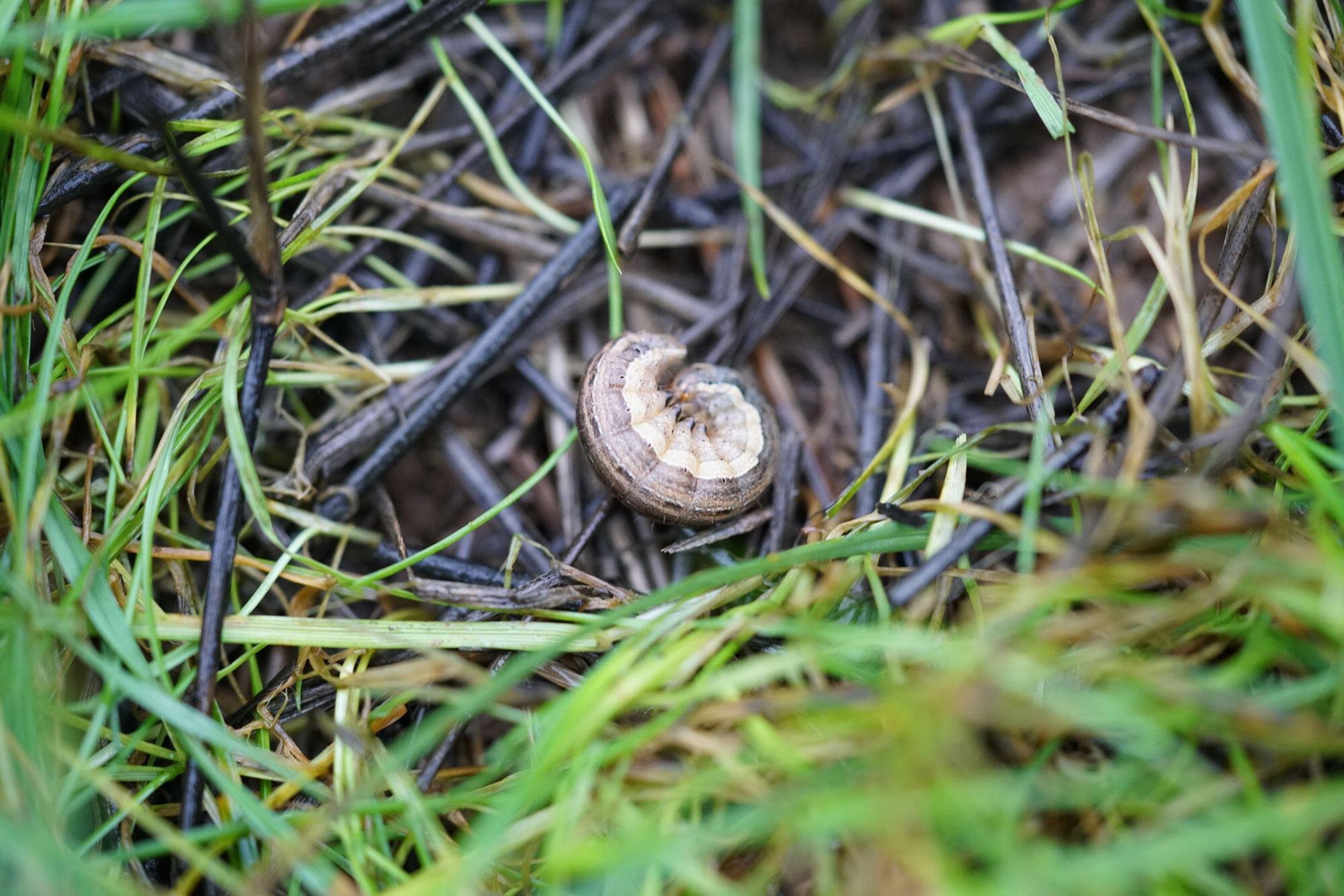
Willamette Valley grass seed and vegetable growers have a free online tool to predict when black cutworm outbreaks will hit their fields.
Researchers at Oregon State University and the U.S. Department of Agriculture Agricultural Research Service (USDA-ARS) developed the forecast models behind the Oregon Pest Monitoring Network. The platform translates nearly two decades of field data into real-time pest alerts. The network, launched in 2022, is live for growers, crop consultants and pest managers across the state.
The tool matters for Marion County, one of Oregon's top grass seed producing counties. Statewide, roughly 1,300 grass seed farms cover as many as 500,000 acres and generate about $1 billion in annual economic activity, according to estimates from Oregon Agriculture in the Classroom.
19 years of trap data
The underlying research, published in Frontiers in Insect Science in January 2025, focused on the black cutworm (Agrotis ipsilon). The team analyzed pheromone-trap data from 77 commercial fields, 57 in grass seed and 20 in vegetables, collected across 19 sampling years from 1996 to 2023.
They found that black cutworm development can be predicted using growing degree days, a measure of heat accumulation tied to insect growth. One full generation, egg to adult, required 795 growing degree days across diet types, with a base temperature threshold of 10.47°C. Late April proved the best starting point for predicting adult moth flight in Oregon.
Seth Dorman, a research scientist at the USDA-ARS Forage Seed and Cereal Research Unit in Corvallis and courtesy faculty in OSU's Department of Crop and Soil Science, co-authored the study. The team included scientists from OSU's Oregon Integrated Pest Management (IPM) Center, OSU's Department of Horticulture and the private firm Goldenrod Analytics LLC.
Why spray timing matters
The stakes are practical. Insecticide sprays work best when they hit young larvae before visible crop damage appears, according to a Sept. 17 OSU Extension story announcing the tool. Mistimed applications can mean lost yield, wasted money or increased insecticide resistance.
The network helps growers coordinate pest monitoring across larger areas instead of relying only on what they see in their own fields. Researchers are also building crop-specific forecasts that flag where vulnerable crops overlap with potential outbreaks in real time.
The Oregon Grass Seed Commissions, the OSU Agricultural Research Foundation and the Oregon Processed Vegetable Commission helped fund the project.
Beyond cutworms, the network is expanding to cover other major pests in grass and clover seed, vegetables, orchard crops, small fruit and other specialty crops. Growers can access the pest forecast tool online.