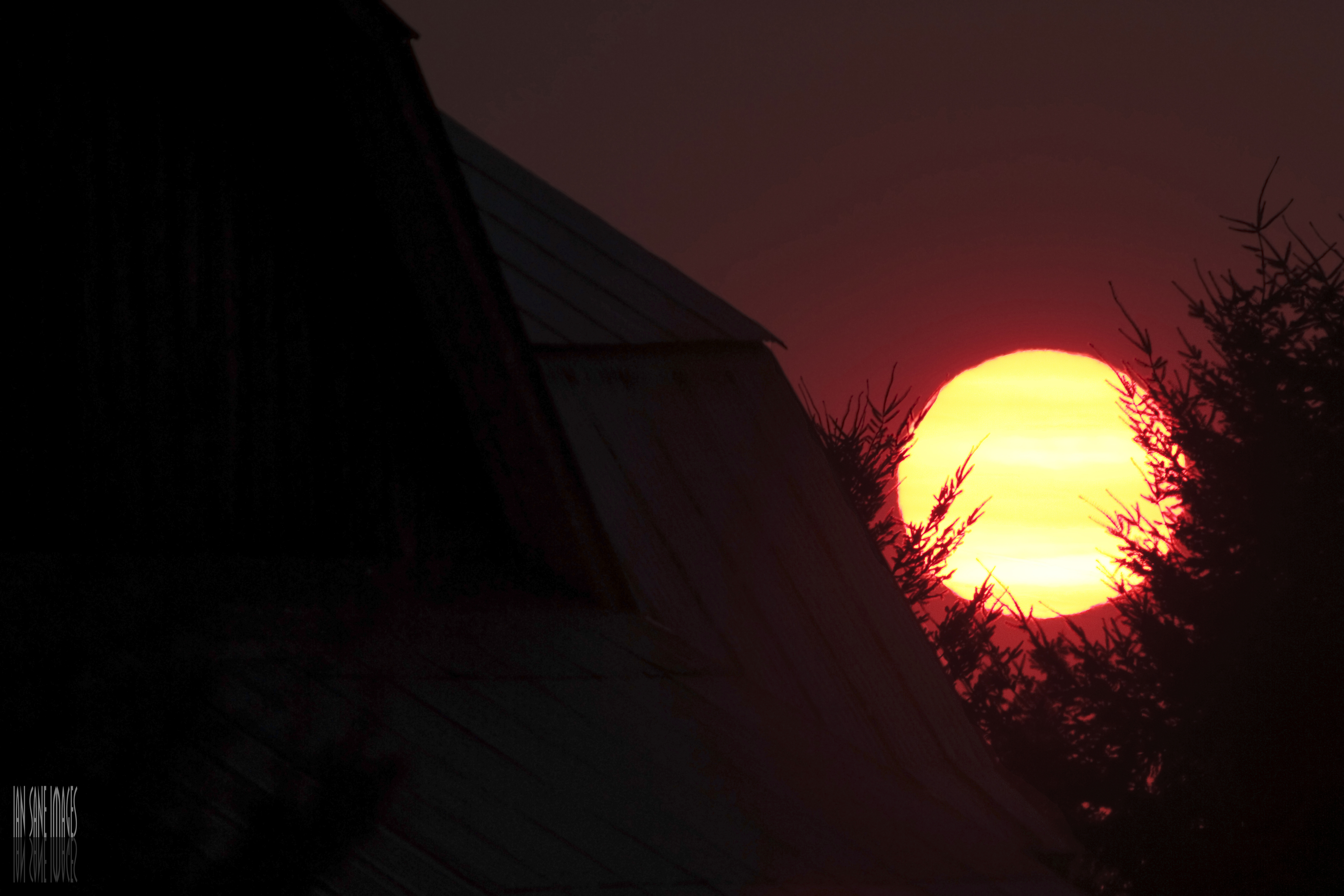
The air Salem residents are breathing Wednesday, Aug. 5, ranks among the worst on the planet.
Portland and the Willamette Valley corridor, including Salem, now hold the No. 1 spot for worst air quality in the world, according to OregonLive, citing IQAir's real-time global pollution index. The region jumped from 10th place on Tuesday. IQAir, a Swiss air-quality monitoring company, has labeled conditions "unhealthy."
The National Weather Service says the smoke should begin clearing by Friday, Aug. 7, when onshore Pacific flow pushes the haze back east of the Cascades. KATU digital meteorologist Bobby Corser said Aug. 5: "We should see a pretty significant improvement in air quality once that wind really kicks in."
Where the smoke is coming from
The smoke choking Salem did not originate locally. Roughly 60 large wildfires burning east of the Cascades in central and eastern Oregon are feeding a plume that travels west through the Columbia River Gorge, driven by an offshore wind pattern.
NWS Portland forecasters wrote that "offshore flow will bring hot, dry, and smokey conditions to northwest OR and southwest WA Tuesday through Thursday."
Oregon's 2026 fire season has now burned more than 2 million acres across 60 large fires, breaking the state's all-time record set in 2024. The milestone was crossed just three days into August, with roughly two months of fire season remaining.
Kyle Williams, Oregon Department of Forestry's deputy director of fire operations, said Aug. 2 when the record fell: "I can confidently say that 2026 has outpaced that year in terms of fires, scale of those fires, stretching of the resources, threats to communities."
The cost
State fire suppression has cost Oregon more than $150 million so far, according to Danny Moran, Gov. Tina Kotek's interim legislative director, in a communication to state lawmakers reported by OregonLive. About $50 million will eventually be reimbursed by the federal government, leaving the state with a net tab exceeding $100 million. Oregon entered the season with $80 million in its disaster response fund. The Legislature's Emergency Board will consider additional funding requests in early September.
How to protect yourself
Wildfire smoke contains PM 2.5 particles small enough to penetrate deep into the lungs and enter the bloodstream. On July 25, when the Oregon Health Authority urged residents to limit smoke exposure, Environmental Public Health Section manager Gabriela Goldfarb warned that "PM 2.5 exposure can decrease lung function, aggravate asthma, cause irregular heartbeat and heart attacks, and cause premature death in people with heart or lung disease."
Those at highest risk include people with chronic lung or heart conditions, older adults, infants and children, pregnant people, outdoor workers and low-income families without access to protective housing.
To reduce exposure:
- Stay indoors with windows and doors closed.
- Use a HEPA air purifier or a DIY box fan with a MERV-13 furnace filter.
- Wear a NIOSH-approved N95 or P100 mask outdoors. Cloth and surgical masks do not filter PM 2.5.
- Set car ventilation to recirculate.
Residents can find clean air shelters by calling 211 (available 24 hours) or texting their zip code to 898211 weekdays from 9 a.m. to 5 p.m. Real-time air quality readings are available at oregonsmoke.org, the OregonAIR app and fire.airnow.gov.