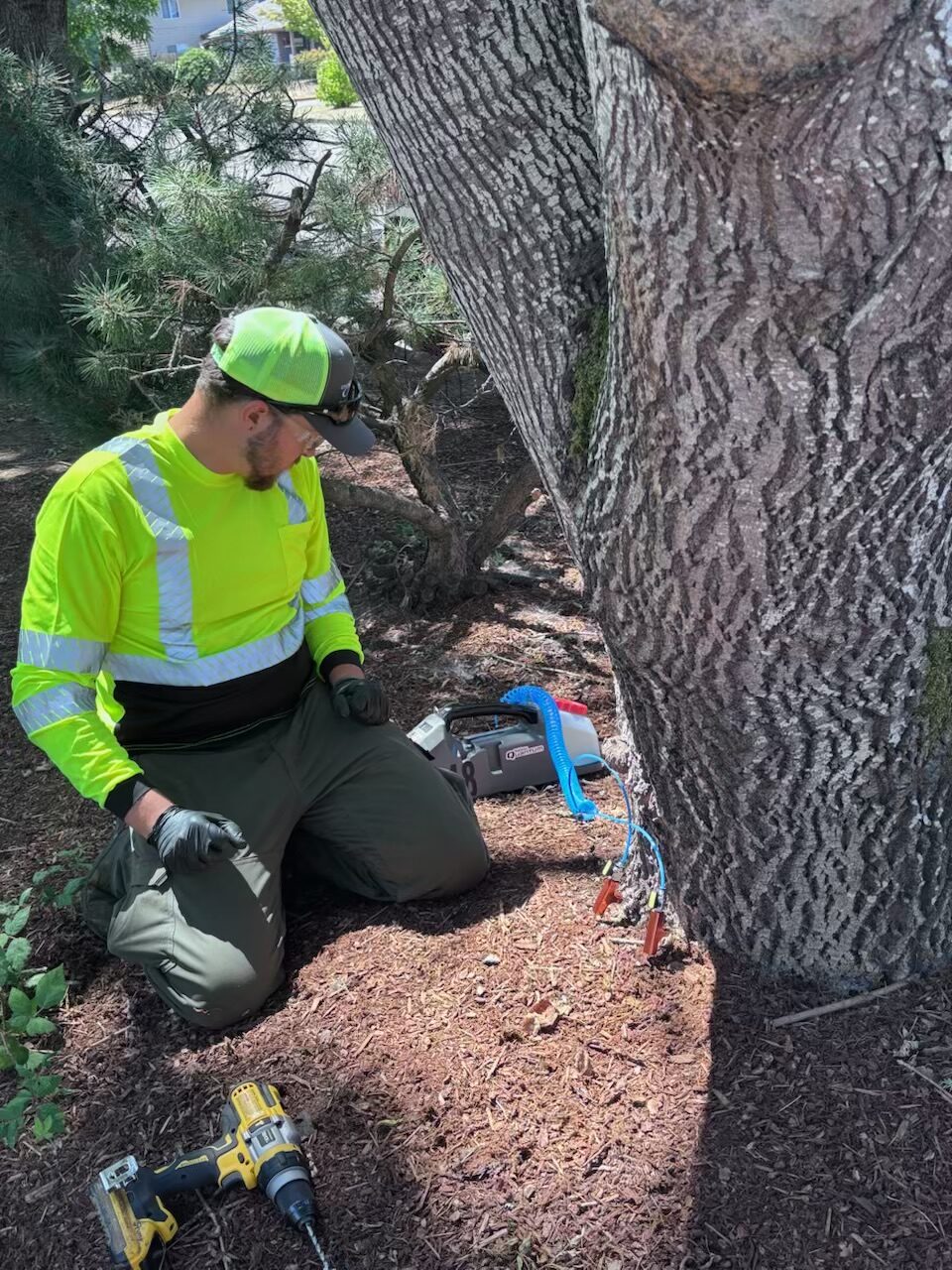
Salem has begun injecting insecticide into about 1,200 of its healthiest ash trees and started removing sick ones as the city rolls out a long-term plan to fight the emerald ash borer, an invasive beetle confirmed in south Salem in July.
The beetle, first detected near West Fork Pringle Creek, cannot be eradicated once established. Oregon forestry officials expect the state will eventually lose up to 99% of its ash trees to the pest, according to OPB. The beetle was first found in Oregon near Forest Grove in June 2022 and has since spread to six counties. That makes Salem's response a race against time for nearly 4,000 ash trees the city has inventoried along streets, in parks and across more than 400 acres of natural areas.
What the city is doing
The city's management plan has four prongs: treat, remove, replant and educate.
Injections began in summer 2025 with 600 trees in north Salem. Another 600 were scheduled for spring 2026, according to an Oregon Department of Forestry press release. The treatments must be repeated every two to three years to remain effective.
The city has halted all new ash plantings and started removing trees in poor health. Removed trees along streets and in parks will be replaced with a variety of species to diversify the urban canopy. In natural areas, crews are underplanting around existing ash trees so replacement species are already growing when older trees die.
A public education campaign through social media, print and community events rounds out the strategy.
What residents should watch for
ODF emerald ash borer specialist Kat Bethea said in the Aug. 6 press release that adult beetles are present only from June through September. Signs of infestation include thinning or yellowing leaves, splitting bark, shoots growing from the trunk or branches, and distinctive D-shaped exit holes.
"Keep in mind that EAB adults are only around from June through September ... If you can capture the beetle in a jar or other container that's ideal, but at least try and take a clear, close-up photo," Bethea said.
Residents who suspect they've found one should report it to the Oregon Invasive Species Hotline at 1-866-INVADER or online.
What homeowners can do now
ODF specialist Matt Mills recommended treating only high-value ash trees in good condition. A large tree can cost about $400 per treatment through a licensed pesticide applicator. Trees planted in the wrong spot, such as under power lines, should be removed and replaced with a species not susceptible to the beetle.
Homeowners with young ash trees may also consider replacing them now while they're still small, which Mills said helps jump-start new canopy in urban areas where untreated ash trees will eventually be lost.
Quarantine rules still in effect
Marion County has been under a permanent emerald ash borer quarantine since 2024. Residents must not transport firewood or other ash materials more than 10 miles from where they were collected, and ash, olive and white fringetree materials cannot leave the quarantine zone.
The city has not announced a date for its next round of injections. More information on identifying the beetle and protecting trees is available at OregonEAB.com.